
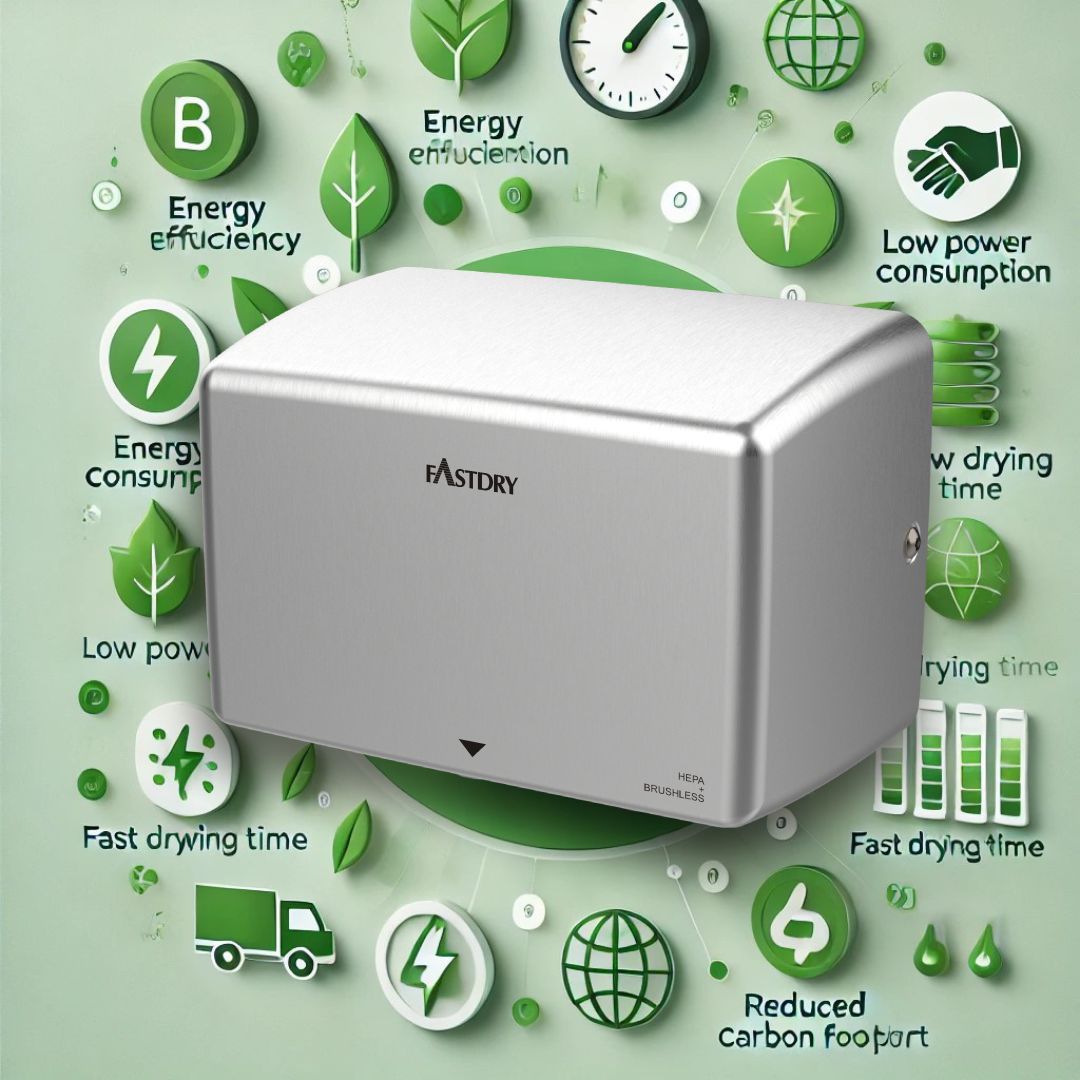
How to measure “green” profiles for hand dryer?
There are multiple ways to evaluate the “green profile” of a hand dryer, especially as sustainability becomes an essential factor in public and commercial washroom design. Manufacturers, architects, and facility managers are now considering not just energy usage, but also recyclability, material safety, and lifecycle carbon emissions when selecting hand-drying solutions.
1. Energy Consumption and Efficiency
One of the most common methods is measuring energy consumption. Traditional hand dryers typically operate at higher wattages and have longer drying times, resulting in greater energy use. In contrast, high-speed hand dryers are designed to reduce both drying time and power consumption, making them a preferred choice for energy-conscious facilities.
Organizations and regulatory frameworks such as GreenSpec, PCR (Product Category Rule for Hand Dryers issued by UL Environment), and the ETL Method for the Testing of High-Speed Hand Air Dryers provide standardized methods to assess energy efficiency across different models.
For example, the EcoSwift hand dryer by Hokwang offers excellent energy performance. At an average 12-second dry time, the 1,000W EcoSwift uses only 0.003 kWh per cycle. Compared to the cost of paper towels at approximately USD 0.015 per use, facilities with 300 or more uses per day typically see a payback period of 12–18 months—even faster in locations where waste-handling fees apply. Hokwang also provides energy and maintenance savings calculators for use in distributor sales kits, enabling data-driven decision-making.
2. Use of Recyclable and Non-Toxic Materials
Another green metric is the proportion of recyclable or non-toxic materials used in the product's construction. Certifications such as RoHS (Restriction of Hazardous Substances) and WEEE (Waste Electrical and Electronic Equipment Directive) validate a product’s compliance with global environmental safety standards. Hokwang ensures that its hand dryers meet these requirements, reducing environmental impact not only during usage but also at end-of-life disposal.
3. Product Carbon Footprint (PCF)
A growing trend in sustainability is evaluating a product’s carbon footprint—not just during its operational phase but across the entire lifecycle, including manufacturing, transportation, and energy use. Calculating the Product Carbon Footprint (PCF) gives a more comprehensive picture of a hand dryer’s environmental impact. Hokwang is committed to developing products aligned with low-carbon objectives and supports transparency through data-driven sustainability metrics.
Conclusion: Choose Green, Choose Smart
Understanding and comparing green profiles helps facilities choose hand dryers that not only lower operational costs but also support corporate and environmental sustainability goals. With high-efficiency models like the EcoSwift, Hokwang delivers performance that’s smart for both the planet and the budget.
Contact us today to learn more or to request our energy and cost calculators for your next project.
- Related Products
-
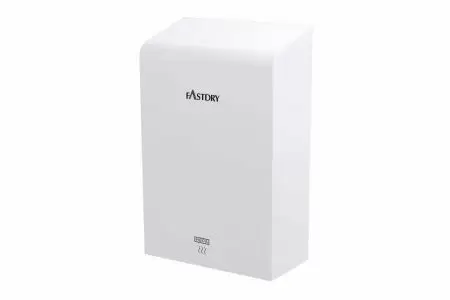
White Stainless Steel ADA Hand Dryer With HEPA Filter
EcoHygiene01W
Another hygienic high speed hand dryer made by Hokwang! EcoHygiene hand dryer has a H13 HEPA...
Details
Satin Stainless Steel ADA Thin Hand Dryer
EcoSlender SA 07
The cover of EcoSlenderSA07 is made from the most popular hand dryer cover material- satin...
Details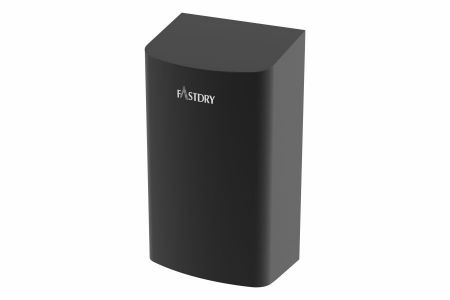
Smallest ADA Matte Black Hand Dryer
EcoSwift01B
It becomes trendy to install small hand dryers in black color to create a modern look in the public...
Details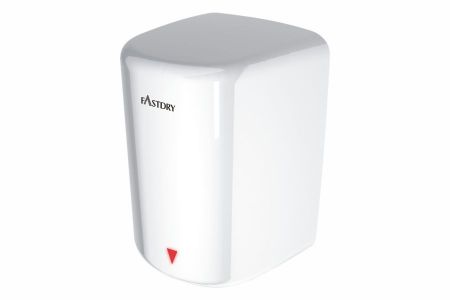
Porcelain Enameled Coating Hand Dryer
HK-JA01
If you are searching for a hand dryer with a novel design and an elegant appearance, the HK-JA01...
Details
Bright Stainless Steel Compact Hand Dryer
EcoFast04
The cover material of EcoFast04 high speed hand dryer is stainless steel#304 with a special...
Details